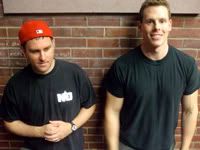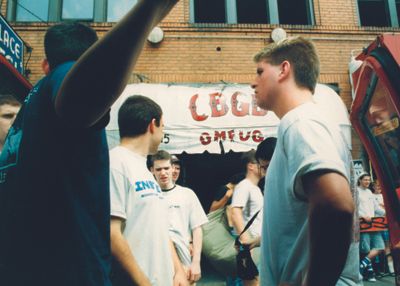
Darren and the TP crew outside of CBGB's, Photo courtesy of: TP
Hi-Impact and Jade Tree guru Darren Walters reflects on the Hi-Impact days and his memories of Turning Point- Gordo DCXX
How did the idea for Hi-Impact come together? Was TP an idea for the label from its inception, or something that popped up after the label was already formed?
After years of being in bands and playing music, I realized that I may be better suited for life behind the scenes. The idea for starting a label eventually crystallized while I was at a family event where I was talking to my Aunt about how I was thinking about starting a record label, but that I wasn't sure how to go about doing it. My aunt told me that she thought I would be great at being a business person and basically gave me a pep talk and inspired me to finally get off of my ass. She was the motivation that I needed; someone to believe in me and show me that I could do it. It meant a lot and I immediately started the label after I got home.
I then called up my friend Victor, we became partners, and we started Hi-Impact. We wanted a hard-hitting name and there was this marker sitting in his room that had that wording on it and we loved it. Especially the way "Hi" was spelled. The name struck both of us as really "core" and so that sealed the deal and Hi-Impact was off and running. All we needed was a band!
Once we told our friends that we had started a label, our friend Scott (who was doing Terminal Productions, a tape label that did a bunch of compilations-including one with Pointless) passed us the demo he had gotten because he had worked with Jay previously. In fact, the demo might have even been tacked on to the end of a Pointless demo that Scott had. The important thing is that I recall hearing it for the first time and flipping out. I knew right then and there that this had to be the first record that Victor & I released. We may have even have called the guys up that night-we were that excited about it.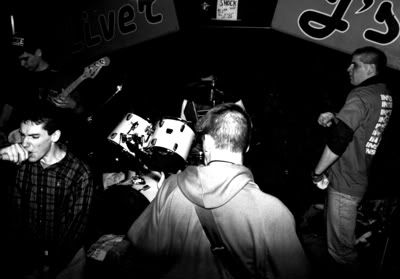
Turning Point at OJ's with Darren on stage in the background, Photo courtesy of: TP
What specifically was exciting about the TP demo? Did it just seem like another young SE band or something special you knew you had to put out?
The energy, the youthful enthusiasm and Skip's voice-it had an edge to it that when combined with the music really made the difference between what Turning Point were doing and many of the other bands of the era. That boy could sing! I ąm biased, but that band was something special. They were clearly talented and not some 2nd generation carbon copy youth crew band that could be easily dismissed. I think their impact speaks to that, as well as the songs that they would write later on in their careers.
In 1988, almost everything I listened to in hardcore sounded alike to some degree, so originality was not something that I heard all of the time, but I knew it when I heard it. Turning Point was not only the real deal-something I think they struggled to prove to other NJ/NY bands-but they were intent on making a real go of being original and almost swimming against the tide of the times. As a band the consistently made strides to move forward and certainly argued about doing so internally as they struggled with their growing pains. They also never tried to be something they were not, which to me, was really important and something which fans picked up on. They were five kids from the NJ burbs and despite all of the noise, they never sang about mean streets or hard knocks (and in fact, we joked about the hard shit that we did love all of the time) but instead addressed the shit we did deal with at that time such as white power knuckleheads at shows, the struggles of growing older or relationships as a young adult.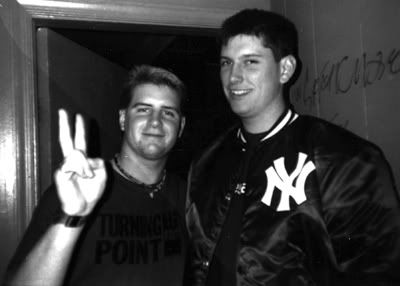
Darren and Ken, Photo courtesy of: TP
What was your relationship like with each guy from TP? What was the band dynamic as you saw it?
Overall, Turning Point were a fun loving, entertaining and determined bunch of kids. They never let the scene bullshit drag them down and they soldiered forward to really create outstanding music in a generic era of hardcore.
Jay (All Business / Ultimate musician - I remember watching him play the drums and thinking 'why the hell does this kid play the guitar?') and Skip (Sarcastic comedian): These two lived down the street from each other and I spent a lot of time at Skip's house, which was the center of the universe. Things centered around meeting there and typically crashing there as well. There was a lot of sleeping over, watching movies, eating calzones, drinking soda, talking shit and general good times had around their hood.
Steve (Band buddy): I spent a lot of time with Steve. We used to go to a lot of shows together without the other band members and hung out often. This became a problem when the band asked him to leave and I think had some bearing on the band eventually leaving Hi-Impact. I never took sides, but I definitely remained friends with Steve when he was out of the band and from that point on had less and less interaction with the rest of the band.
Nick (The kid with sardonic wit): At the time Nick was in the background more, but as time moved on, Nick moved out of his shell and become more funny and outgoing. Nick struck me as the kid who was along for the ride, but who eventually became a stronger voice within the band. One of the few members I am still in touch with these days. In fact, I have been emailing him the last few minutes.
Ken (The working man): Ken had a job, made a real living and his house was the practice space. He, as the drummer, was the solid one of the band. A good guy that you leaned on when you really needed something done. I recall going over there and spending many hours watching the band develop their new songs and direction. I saw many songs take shape, be played at a show once or twice, and then eventually get dropped.
It was a really interesting place to be, and a great time.
What were your ideas for the 7"? What can you recall about hearing the 7" recording for the first time, as compared to the demo?
To release the most amazing record ever! The record was done at a studio near where I was born and around the corner from my grandmother's house, so Victor and I attended the sessions and participated (Victor thinks we should have gotten production credits) in the recording process. I recall how while the recording was happening how flabbergasted we both were at how amazing it sounded. It synthesized what we were both thinking about how amazing the band could sound if they were recorded under better than average circumstances. In other words, in a real studio where their nuances could be heard clearly and then not compressed or distorted once transferred onto the vinyl. To this day I ąm proud of the way that the record turned out sonically. Especially for the timeframe of the late 80s when so many awful sounding hardcore 7"s were being released.
To be continued...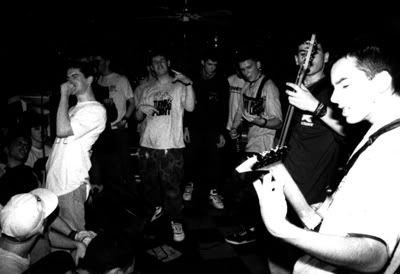
Hi-Impact 7" era Turning Point lineup up, Photo courtesy of: TP
Monday, June 22, 2009
Darren Walters - Hi-Impact / Jade Tree Records, shares his Turning Point memories

Sunday, June 21, 2009
Poll results for favorite NYHC 7", plus Keith Burkhardt from Cause For Alarm
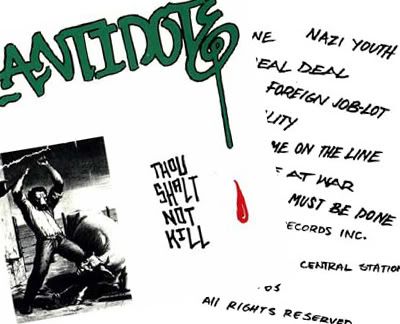
I'm going to keep my comments to a minimum here regarding the poll results and instead, hand it right over to Keith Burkhardt, frontman for Cause For Alarm. Keith delivers a great story that we felt fit right in line with this last poll. Big thanks and much appreciation to Keith for sharing this. -Tim DCXX
Antidote - Thou Shalt Not Kill - 213
Agnostic Front - United Blood - 117
Abused - Loud and Clear - 49
Urban Waste - EP - 37
Cause For Alarm - EP - 29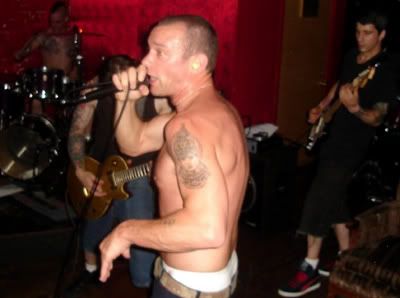
Keith Burkhardt - Cause For Alarm
Tim has been kind enough to ask me what one of my most memorable hardcore/punk shows was. I thought about this for a while, of course the usual suspects floated into my mind's view . But just as quickly I had another thought as this question pushed me back in time, to a place I don’t visit much.
My mind’s eye brought me back to a 17 year old or so Keith, standing in a small, dark club called A7. Outside it was cold; grey…just another LES winter. Avenue A empty, except for the Park Inn and the bright florescent lights of Ray's just a few doors south.
Victor was manning the door, Doug (Kraut) was tending bar and the usual crew was milling around; Raybeez, John Watson, Robbie Crypt Crasher, Michelle, Stigma, Harley, Kevin, Manue, Lucy, Blue, Lazar, Jimmy, Rob, Alex, Linda, shopping bag girls, Poss, Glenn, Joe nails, Richie, Adam (Beasty Boys), Charlie, Kenny, Johnny Waste, Angelica, Laura and various other misfits, punks, drug addicts, drunks, hangers on, rich kids that found the “real” scene and assorted other freaks. Sorry, I know this list is incomplete, but you get the picture.
This was our little world, we ruled it. No cops or other authority types came into the hood back then, we policed ourselves. We all had some sort of story, some reason for being there. It was a mixed bag of rich, poor, abused, disenchanted or neglected…but if you were there, you had your reasons and for the most part you weren’t judged. It was very special; a sort of weird Burtonesque film set, magical comes to mind. Perfection of life it was not, but in its raw state it was very “real” and an almost parallel universe. It forced you to face who you were or else it chewed you up, you could become lost in a sort of hell, like in “What Dreams May Come”. It could turn you into a zombie, like being lost in a Bardo wandering aimlessly.
OK... to “The Show”. The Headlickers comes to mind for some strange reason? I have not thought about this band since 1982. I remember seeing them at A7, it was probably about 4am when they went on and we were all there ready for some fun. It was just all friends for the most part, the atmosphere was charged with good energy, everyone dancing, some off to the side rocking their heads. The band was fast and fun and at one point throwing out cherry cigars into the crowd (all 30 of us!). John and I were sporting our mad dance floor moves LOL, (Watson was the most stylish dancer hands down) LOL. We were all there, in that little shithole of a club at 4am acting like a bunch of jack asses! Reagan was in office, the recession was dragging, NYC was a different animal. But our tribe was holding court on this little point in the universe at avenue A and east 7th street and I would not have wanted to be anywhere else in the world.
Peace, Keith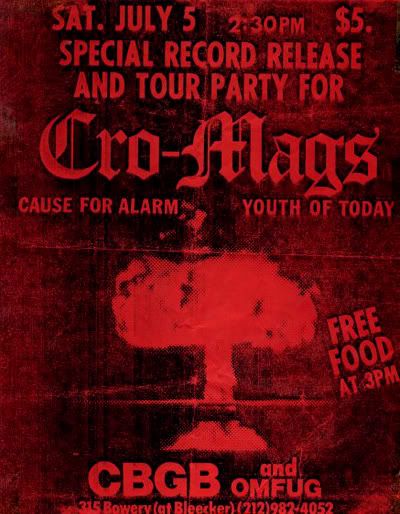
Thursday, June 18, 2009
Dan O'Mahony Part IV
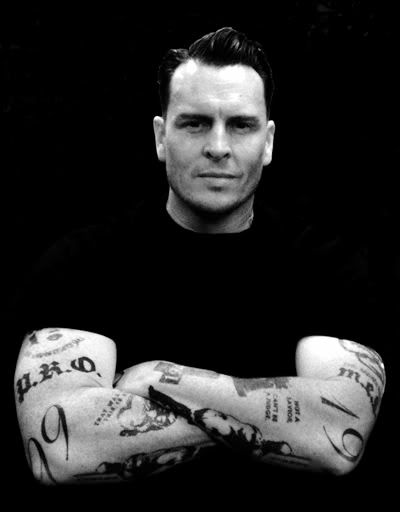
Dan O'Mahony 2009, Photo: Kate O'Neil O'Mahony
Dan O returns... -DCXX
You mentioned Zack de la Rocha playing drums for NFAA - I had never heard about that, was he much of a drummer? Strange to think about today?
Zack's run in NFAA lasted only a couple of weeks, I don't know if it included even any shows. He was a good friend and doing us a favor during a tough time, drummers being scarce back then. Roach was one of these Kevin Murphy types who can play any spot in the band with decent results, guitar and later vocals were his strongest suits. Very strange to think about today.
You mentioned some of the strain with Bratton and some of the inland guys. There has been a long running question as to any beef between NFAA and Chain back then - surely it was juvenile stuff and nothing today, but Chain did go so far as to hint at it in interviews and even put it on their EP matrix. What was the deal? Again it's kid stuff obviously.
It really is. And while I understand the curiosity on the part of anyone fascinated with the era, I don't see anything productive in my trying to remember what caused what, who said what, or where it ended. On one of my forearms the words "That was then, this is now" are tattooed, on the other, "Not a savior, can't be a judge". I'm going to try to follow my own advice on this one.
Dan mixes it up with the Anthrax crowd, Photo: Jeff Ladd
How did Workshed get off the ground, and can you give us a little behind the scenes history lesson with the how and the why?
The how went something like this...Billy Rubin had taken over New Beginning in late '87 or early '88 I believe, and was running all of his manufacturing through a fellow named Kane Boychuck, who would aid in production and distribution for a cut of the returns. Kane was looking to his expand his operation and was hungry for labels, so Billy suggested me. Like any Gung Ho hardcore kid, I jumped at the chance to run a label.
Hard Stance was Billy's rather forceful suggestion as a first release feeling they fit in with the Dan O sphere of influence a bit better than what he was doing. I was lucky to have such a talented act available to me and am very proud of that release.
The why was even simpler...hardcore was my life.
A little known fact, the name Workshed has it's origin in a ludicrous scene from The Evil Dead II rather than anything noble or intellectual. That movie was a big VCR hit with all us OCHC types at the time.
How did you feel about the finished product of the NFAA LP? What were your hopes and expectations for that record? An LP on Hawker at the time was a pretty big deal.
I like the EP better. I enjoy the big sound of the LP but only about half of the songs, and many of the vocals make me cringe. I was going through some sort of a deep, dark, and gutteral-sounding-is-best phase with regards to my voice. I can't say I really feel that way anymore. Even the Carry Nation vocals are a bit less exaggerated and more enjoyable to me. With regards to hopes and expectations, changing labels helped us forge a seperate identity we were longing for, the full page ads were nice, but little else was expected, an album was our next natural step. Hawker was big deal intitially but plenty of people don't even remember what label that LP was on these days.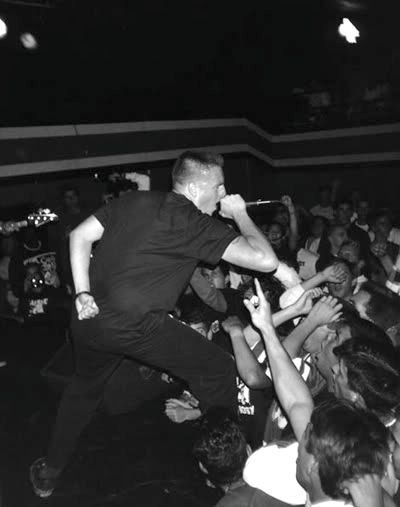
No For An Answer at The Whiskey, 1989, Photo: Dave Sine
As new talent was coming up by 1989, with guys possibly a few years younger than you, what were your general feelings as someone who was a member of the older guard and had been around for some time? (Especially as younger attitudes became possibly more righteous).
Sometimes my lack of appreciation for a band would be based on age but more often style and lack of originality. If you look at the 10 Workshed releases, no 2 bands sound alike, or even similar. That was becoming rare at the time. Predictable breakdowns, mosh beats as we were calling them on the toms, betrayal anthems up the wazoo all got pretty exausting. This is something even we were guilty of early on, but it just got so extreme.
As far as attitudes go, I'm not sure how you mean the term righteous, but the faux militancy, fondness for cult religions, and suburban mock gangsterism were all pretty embarassing and something I couldn't relate to. 9 times out of 10 you'd hear about these regional superheroes with a score to settle, meet them in person, and find that they couldn't break an egg with a hammer. That said, I'm sure the guys that preceded my generation found some of our affectations pretty silly. Every phase of this genre has produced a few real diamonds. We all tend to "dance with the one that brung us".
How exactly did NFAA wrap up? Did it just dissolve? There didn't seem to be much publicity of a final show or anything.
We did announce our final show as such, (I don't think it caused much of a ripple back east as we'd left Rev and hadn't travelled to the opposite coast much lately) and played it at the Country Club in Reseda. Zack announced us, and talked to the crowd about how it was hard to say goodbye to a band that had had so much to say. I treasured that. We had been losing steam for a few months, knew Sterling and Chris were moving on had no stomach for adding 2 more new guys. It was a pretty easy call.
When did the idea come up to do the Carry Nation record and play out? Had NFAA been put to rest at that point?
I don't remember how the idea came up, but NFAA was still going and Carry Nation was meant to be a side project. As it turned out, Carry Nation had a more dramatic, over-the-top style to it that lended itself to theatrics like intro music and lights-out set starts, banners, etc. that wouldn't really have fit NFAA and made it really fun for a while. A right time, right place thing that filled the gap between NFAA and 411 for me nicely. I look back on it fondly.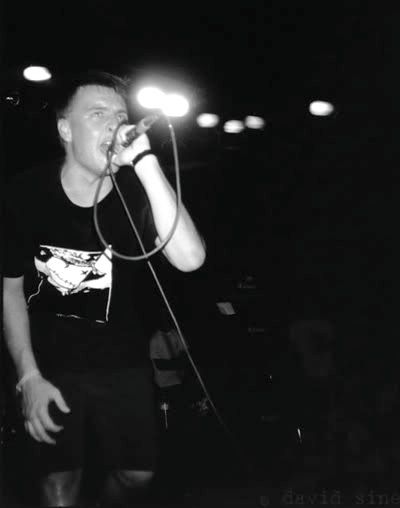
Carry Nation at The Country Club, 1990, Photo: Dave Sine
Monday, June 15, 2009
Birds of a Feather - The Past The Present
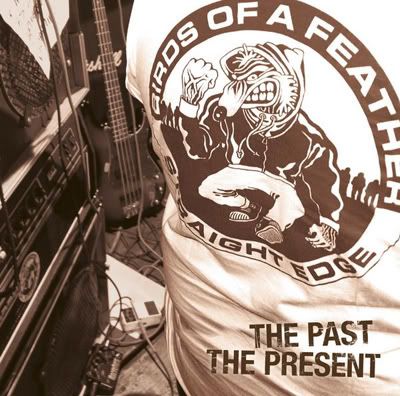
Birds of a Feather bassist, Jean-Paul recently hit me up asking if DCXX would be interested in running this story on the release of the bands new LP and a book on the history of European straight edge that coincided. I of course agreed to run the story and I'm eagerly looking forward to seeing and hearing both releases. Check it out. -Tim DCXX
"THE PAST THE PRESENT" LP
This story starts somewhere in the mid 80-ies. Bigma turned straight edge. Profound turned into Manliftingbanner when Bigma joined. After the demise of Manliftingbanner, Bigma continued his straight edge crusade with Mainstrike. In 2005 he was stuck without a band. Pushing towards 40, Bigma wasn't rethinking his ideals for a better society, instead his urgency to get out his message was growing stronger and stronger. He wanted to address the current hardcore scene, where the true spirit and meanings of the original first wave of straight edge had disappeared. Strangely enough, just around the corner from Bigma, JP, from Value Of Strength magazine, had mutual feelings. He wanted to startle up the scene with a straight edge band with members all older than 30 years, showing that the ideas behind straight edge still hold true, even in 'real life'. Birds Of A Feather became reality. The Our Aim 7" was recorded shortly after. Going thru some line-up changes, the band found it's definite line-up in 2007, with Jeff of Crivits and the X-men in guitar, Marc of Betray on guitar, and Paul, a then 30 year old "newjack", on drums.
So Birds Of A Feather is ready. Watch out for 80-ies style, youth crew sing-along hardcore, bringing an ever urgent message for a positive lifestyle and a better society. With the same drive to get out the message as in the 80-ies and 90-ies. To show that straight edge is not "a passing phase". To show that hardcore is not a passing phase. To prove that our ideals still matter, and still need work. Right then and right now: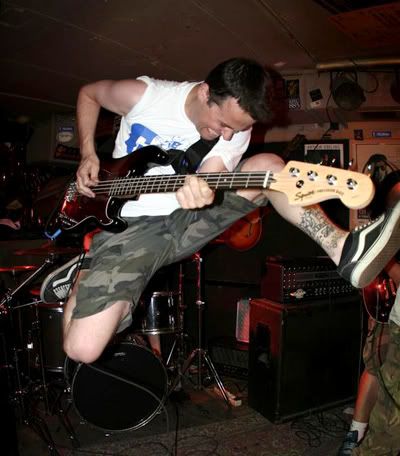
Jean-Paul with Birds of a Feather, Photo courtesy of: BOAF
"The days that we lived our dreams are over
And the barriers are tougher than before
20 years passed by and we are back again
The way it was supposed to give meaning
What was said, what we believed In the past
What we said and still believe
Counts even more today"
Birds Of A Feather previously released the Our Aim 7" on Crucial Response (vinyl sold out, CD still available), a split 7" with In Defence on Give Praise Records (sold out), the Chapter 5 7" on Commitment Records (vinyl, still available) and their The Past The Present CD on Refuse Records (still available), and also in Asia on Crucial Times Records and in South America on 78 Life Records . "The Past The Present" contains 13 songs recorded by Menno Baker in Bunt Studios in Holland and mastering was done by West West Side Music, NY, USA.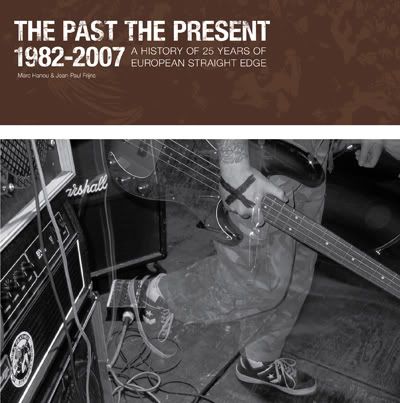
"THE PAST THE PRESENT 1982-2007: A HISTORY OF 25 YEARS OF EUROPEAN STRAIGHT EDGE" BOOK (Marc Hanou, Jean- Paul Frijns)
The LP version of Birds Of A Feather’s album "The Past The Present" also includes the book "The Past The Present - a history of European Straight Edge 1982-2007". 108 pages and over 250 photos documenting the straight edge scene in Europe.
Straight Edge is a powerful subculture of a subculture. Punkrockers that don't smoke, don't drink and don't do drugs are the outcasts of the outcasts. By following a timeline from 1982 to 2007 the straight edge authors tell the narrative of the European straight edge with the oral history from those who were there and from those that are still there, the people that made and still make it happen. The particular development of the European straight edge is described by five Dutch bands, each representing a different era. Starting with Lärm's Do It Yourself punk ethics the straight edge scene in Europe has developed itself towards political activism of all sorts with a strong emphasis on vegetarianism and veganism as Eye of Judgement shows. Capturing the immense energy of a vibrant and vivid scene, The Past The Present contains stories from entire Europe, from Sweden to Spain and from Portugal to Poland. A document for anyone interested in hardcore or straight edge.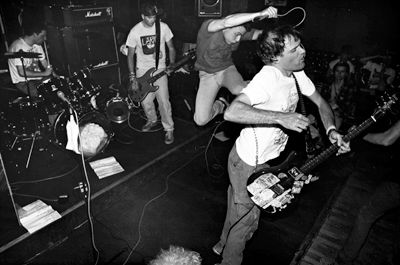
Larm, UK tour 1987, Photo courtesy of: JP
The authors
Marc Hanou (1967) discovered punk in 1981 at age 13 and saw Lärm play at age 14. He became straight edge in 1985 and vegetarian in 1986. He played in BTD, Betray, Dance Cleopatra, Longshot, Blackheads and in Twin Cities outfit In Defence. Currently he plays bass in Nixnieuwz and guitar in Birds Of A Feather. He had a straight edge radio show between 1988 and 1994 on radio Patapoe, Amsterdam, did Revelation Records Europe from 1990 to 1994, booked dozens of shows at the Dirk and the Maloe Melo, both in Amsterdam, and booked shows in Europe for dozens of bands as well, from Green Day to Born Against.
Jean-Paul Frijns (1973) heard punk for the first time on a new-wave compilation tape that someone made for him during the end of the 80's. Skateboarding and magazines like Thrasher and Maximum Rock 'n Roll got him more involved in punk and hardcore. It introduced him to straight edge and inspired him to start his own zine Value Of Strength, that is still around today. He organized the 'Geleen Festival' during the 90's and booked shows in the southern part of the Netherlands. He interned as a graphic designer for Victory records and lived in Chicago where he picked up the bass guitar. Currently he plays bass for Birds Of A Feather and books the occasional show at the Maloe Melo.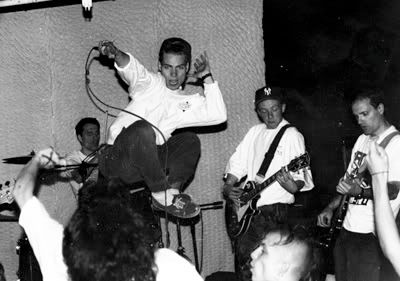
Man Lifting Banner in Belgium, 1990, Photo courtesy of: JP
Appearing in the book: Andreas Gruter, Germany ("Vengeance" zine, worked for Crucial Response Records), Atanasoski Vasko, Macedonia (F.P.O.), Bart Griffioen, Holland (PROFOUND, COLT TURKEY, MANLIFTINGBANNER, DEADSTOOLPIGEON), Bruno Miguel Piairo Lopes Teixeira, Portugal (NEW WINDS, THESE HANDS ARE FISTS), Bruno Pires, Portugal (NEW WINDS), David Leon, Spain (AFTERLIFE, THE DEFENSE), Fausto, Spain ("AHC" zine), Hans Verbeke, Belgium (RISE ABOVE, BLINDFOLD, SHORTSIGHT, SPIRIT OF YOUTH, LIAR), Inti Carboni, Italy (show promoter), Jasper, Holland (A STEP APART, EYE OF JUDGEMENT), Jennifer Ramme, Poland (Emancypunx Records), Jeroen Vrijhoef, Holland (MAINSTRIKE, Coalition Records), Johan Prenger, Holland (Reflections Records), Johnny van de Koolwijk, Holland (MAINSTRIKE, REACHING FORWARD, DOWNSLIDE), Jos Houtveen, Holland (LARM, SEEIN' RED, STAATHAAT), Jose Saxlund, Sweden (ABHINANDA, Desperate Fight Records), Lord Bigma, Holland (MANLIFTINGBANNER, MAINSTRIKE, NO DENIAL, STRIKE FIRST, BIRDS OF A FEATHER), Lucas van Heerikhuizen, Holland (EYE OF JUDGEMENT), Mario Tucman, Croatia (VASELINE CHILDREN), Marcus Erricson, Sweden (EYES SHUT, LAST HOPE, DAMAGE CONTROL, ANOTHER YEAR, ANCHOR, "Soulcity" zine), Mark Schenk, Holland (EYE OF JUDGEMENT), Michiel Bakker, Holland (PROFOUND, COLT TURKEY, MANLIFTINGBANNER), Olav van de Berg, Holland (LARM, SEEIN' RED, PROFOUND, COLT TURKEY, MANLIFTINGBANNER), Patryk Bugajski, Poland (SUNRISE, DAYMARES), Paul van de Berg (LARM, SEEIN' RED, PROFOUND, COLT TURKEY, MANLIFTINGBANNER), Ram, Denmark (artist), Rat, UK (STATEMENT, UNBORN), Ricardo Dias, Portugal (TIME X, DAY OF THE DEAD), Rob Beekmans, Holland (ABUSIVE ACTION), Robert Matusiak, Poland (Refuse Records), Robert Voogt, Holland (Commitment Records), Roel, Holland (EYE OF JUDGEMENT), Willem Jan Kneepkens, Holland (INSULT, EYE OF JUDGEMENT), Yann Boisleve, France ("International Straight-Edge Bulletin"),
The LP version of "The Past The Present" is released in a gatefold w/ the book:
Test pressing: 25 copies, exclusive cover with different artwork, black vinyl, the book signed by the authors
Pre-Order version: 100 copies, brown vinyl, white labels stamped and numbered
Limited color version: 122 copies, orange vinyl
Regular 1st press version: 278 copies, brown vinyl
Birds Of A Feather: http://www.myspace.com/xbirdsofafeatherx
Recording the album "The Past The Present"
BOAF visits Poland (2008, 15th Refuse anniversary)
For ordering info get in touch with Refuse Records:
refuserecords@gmail.com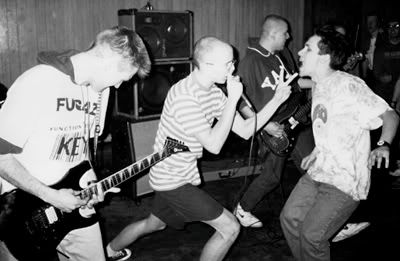
Betray, UK tour 1991, Photo courtesy of: JP
Sunday, June 14, 2009
Brian Walsby - Double Negative / Artist

Brain Walsby at the drums with Double Negative, Photo courtesy of: Brian Walsby
We continue with another memorable show entry, this time from Double Negative drummer / well noted punk artist, Brian Walsby. -Tim DCXX
Let's see...Well I am an older guy and came into things in the early eighties or at least 1984. I saw Black Flag in March of that year and that was it...the band had already gotten the lineup with Kira and Bill Stevenson. The band came out without Henry and played the still unreleased instrumental Obliteration from the Slip It In album. That, more then anything else, just blew me away. Just the three of them playing that song. It sounded so massive. Henry had not even appeared on stage yet and already it was amazing. So I would say that, because it set the tone for everything else I would see, and looking back, that song just killed. I still think so to this day.
Thursday, June 11, 2009
Mark McKay with some SLAPSHOT in your face

Choke with Slapshot at the Country Club, Reseda CA, Photo: Dave Sine
Slapshot drummer Mark McKay brings us the first round of answers to our never ending questions about one of Boston's baddest. Expect tons more to come - STRAIGHT EDGE IN YOUR FACE. -Gordo DCXX
When did the original idea for SLAPSHOT come together? What was the idea and outlook for the band?
Slapshot was born in September of 1985 out of sheer willpower from Steve Risteen. Steve and I (friends from high school) were determined to start a hardcore band, after Steve’s previous band (with later Slapshot cohort Chris Lauria), TERMINALLY ILL, broke up. He had been meeting up with Choke on occasion and had the guts to ask him if he wanted to start a band and get back into it. Much to our surprise, Choke was into it and we had become pretty good friends (after a ROCKY start!).
Boston was pretty dead for hardcore (no offense to anyone who was keeping it alive!!!), as a lot of the original bands we followed had imploded or just disappeared. Back On The Map was our manifesto and “call to arms” for all the kids in Boston to rally round their dying (but proud) scene and kickstart it again. It was a lot of hard work, but we all had been going to shows and supporting the scene since the early days, and had lots of friends to occupy the early shows – and they were really needing some release!
Not sure if we would even catch on, Slapshot just did everything as best we could – we often said (and still often say) “any show could be our last, so make it good!”
Was SLAPSHOT meant to be a continuation of the early Boston spirit or a new birth of sorts?
I would say both. We wanted to take that utter menace that existed in the early scene (perceived or real) and give it new life. We didn’t want the music to be all that different, though it came out a little more “Oi” sounding than the previous owners – we LOVE(D) that old sound: Minor Threat, Bad Brains, SSD, Negative Approach…
Mark McKay on his 21st birthday with a straight edge birthday cake. Choke, Steve Risteen, Jon Anastas and others cheer him on, Photo courtesy of: Mark McKay
How much of a focal point was Straight Edge for Slapshot at the beginning? Was it something immediately made part of the band's identity, or something that just clicked once things got moving?
We were VERY focused on the Straight Edge as that was the way that we were. Of course we had some fun with it (the “Straight Edge Chant” and some REALLY exaggerated early interviews), but we were all straight edge and wanted to have that be a piece of who Slapshot was. It was a real source of pride in Boston back in the day, and was still very important to us. So as soon as we said, “We’re Straight Edge” and the rumours started back up about Choke and the knocking of beer bottles from drinkers' hands, and tales of “drinkers and smokers being on the WRONG end of the hockey stick,” we ran with it.
In retrospect, what was the climate of the Boston HC scene at the time of the early Slapshot shows? What was Slapshot's "role" in Boston, and elsewhere?
I have a different tale to tell than the other guys, and I would imagine that everyone would have a different tale. In Boston, the pits were really hard. The shows were PACKED and hot. The music was WAY too loud, and the venues could not possibly have sustained this pace for as long as they did. But it was more excitement than menace, you know? There was no feeling that you would be beat up for doing your thing, and every freak had each other's back.
When we went to other cities, we knew a few kids in most places. But they were propogating the “myth” of Slapshot too, so when we pulled up to places like Buffalo, Detroit, Kansas and piled out of the van all wearing identical varsity jackets proclaiming that we were from Boston – it looks pretty weird, and most folks did NOT know what to make of us. The music eventually spoke for us, but the image of this gang of hoods invading your town was just classic to me – especially when we became friends with folks in the towns, and they were telling us, “we had NO idea what to expect." Just great! I hope we brought a bit of show, a bit of entertainment and a bit of menace back into the scene – that would make me happy.
Who were the bands Slapshot identified with most? How did you gel with others in Boston at the time? What about elsewhere?
Well, we did not identify with too many bands out there that we came across (again, apologies to those that we LOVED) – we were just too busy being ourselves to care. We have ALWAYS (well, nearly always) enjoyed each other’s company, and music was kind of second to our having a good time traveling and hanging out. Of course, we saw TONS of great bands, but usually would forego opening bands sets for just goofing around town or eating, etc. That sounds totally crass, but that’s the way it was…
Boston was always GREAT for us – we were playing to our friends, people we had been going to shows for years with – all of a sudden, we have a band of our own! I see some old pictures and all the kids up front were kids I had seen every show I had ever seen with! On show days, we would meet in Kenmore Square and hang out. Then we would grab our gear, set up and play. Then after the show, we would return the gear, and back to Kenmore Square to hang out some more. No separation, a good team of friends.
As for influences musically, well I think you can hear a LOT of the English “Oi” bands in our songs, a bit of Minor Threat and Negative Approach. I WISH we could claim that our stuff was influenced by Bad Brains (as we all worshipped them) but we were not able to play anywhere NEAR their level to even qualify…
Steve Risteen, Choke and Mark with Slapshot at The Paradise, Photo courtesy of: Mark McKay
Wednesday, June 10, 2009
Dan O'Mahony Part III
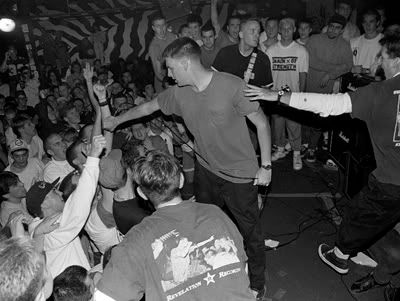
No For An Answer at The Anthrax with quite the crew accompanying them on stage. Porcell about to go for a dive, while Walter, Anthony Raw Deal, Arthur Smilios, Alex Chain and others watch on. Photo: Jeff Ladd
More history from Dan O. This is shaping up nicely! -Gordo DCXX
Did NFAA evolve early on as you expected?
Not exactly, as I mentioned previously the sound was faster, much faster than we'd intended, and the imagined early DC influences that were the big favorrites of all four of us from the You Laugh era didn't really surface. We sounded like rookie musicians playing basic HC. In retrospect, that result was a lot more fun and appropriate given our experience level. I wasn't Dave Smalley, Gavin wasn't Brian Baker...especially not in the mid 80's.
As far as the attitudes and positions of the band, we were all from the era when the distinction between punk rock and HC was not as clear or delineated as it later became, thus we stressed non-conformity and moderation in the judgment of others more than some of our peers.
Who were the closest friends and supporters of the band? How did NFAA fit into the growing SEHC scene of California in 1987-1989?
At the point of our formation in '87, our friends were many and had been established over the years, most importantly the legendary Anthony Persinger as the Beaver, David and Paul Theriault, John Bruce, Billy, Half Off, the UC and Insted guys, Big Frank, Ron Martinez from Final Conflict, and a host of others who all played crucial roles in getting us started on the right foot...getting shows, getting to shows etc. By '89 a lot of others from Irvine had their things going, Zack, the Hayworths, Popeye, the Head First guys,etc. These people were involved in the early Workshed offerings, the Spanky's and Heritage Park shows with NFAA and Carry Nation as well as many other things.
In terms of how we fit in, there are two factors, one chronological, the other regional. In terms of Straight Edge, UC hit in '84, NFAA in '87 (Carry Nation took a swing but didn't really materialize in '85), Insted pre-dated NFAA by a year or two but didn't really declare SE until their later Labate/Burt lineup, '89 or '90 I believe. Following those intial three (in terms of national recognition, there were others on the local level) the greater Posi/SE/HC scene blossomed a couple years later with Hard Stance, Farside, Reason to Believe, the Nemesis acts, Free Will, Blackspot, Headfirst, and dozens of others.
Regionally, OC didn't mix as well as we could have with people from other areas. The Bay area went largely ignored other than MRR and Gilman. The Inland Empire saw many members of old acts that had drifted slowly towards melodic almost rock formats suddenly re-emerge in highly derivative east coast type bands fronted by younger people from outside hardcore as we knew it. We rarely played with or interacted with them and that led to alot of unfortunate animosity, as NFAA was staffed by older, well networked guys, who had a real edge in terms of booking certain venues, drawing coverage from certain zines, etc. Twenty+ years down the line, we all represent the very old school and these rivalries seem pretty silly. I tend to enjoy running into anybody from the 80s these days.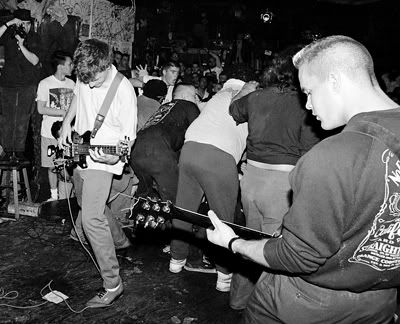
Sterling and Gavin jam it out while Dan and the security face the CBGB's crowd, Photo: Ken Salerno
How did the east coast connection develop more? How did you fit in on the opposite coast with guys from NYC and CT?
On the one hand we were grandfathered in. Ray Cappo, John Porcelly, Richie Birkenhead, Mike Judge, and Craig Setari all lived with my mother and I in HB for months during the hammering out of Wishingwell's release of the original Break Down The Walls LP. Jordan Cooper was the one to meet us at the train station when we arrived in CT. Sam MacPheeters and I had been in contact for a while before the Hawker Is Hardcore trip and he and Adam, from what was later the whole Vermiform vibe, were our NY escorts, Gavin Van Vlack was one we met through them, and he became quite the provider. I guess you could say we had strong advance support!
In terms of fitting in, we were reasonably well recieved. We wore a little more black and a few less hoodies than our east coast brethren seemed to realize, but all in all it was an adventure I'd never trade for anything. CBGB was more interesting to us than the Anthrax primarily because there was a far greater diversity in terms of pesonalities and backgrounds, a little scary, a little sexy, very historic.
What did it mean to be on Rev at the time? How did it help/hinder the band?
Other than a brief period in the 80s when the whole youth crew thing limited people's understanding of us as an individual unit with our own opinions, tastes and sensibilities, separate from those of our labelmates, Rev was a complete help. They are why we gained national recognition...period. My relationship with the label remains intact to this day.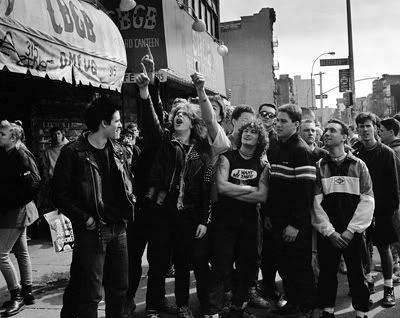
CBGB's Hawker Records showcase, Free For All show with members of Wrecking Crew, Rest In Pieces and No For An Answer preparing for the photo shoot. Photo: Ken Salerno
How did the connection with Hawker develop?
Firstly, John Bello from Hawker contacted us at an ideal time when I was not sensing a lot of enthusiam or at least prioritizing from Rev in terms of an NFAA LP. Futhermore we fit the Rev label image at the time less and less every day. At the time the DIY vs. Major debate was raging full swing and in my opinion was being oversimplified. My thinking in the late 80s being that if you could contractually protect your lyrical and artistic content completely while insuring vastly superior distribution, you had an obligation to your message to go for that larger avenue. Contrary to legend, the advance money was around $4,000, covered recording and a little merchandising, and played very little role in the decision.
Memories of the Hawker show at CB's?
A huge day for meeting the legends of the era. Check out the faces in that cover shot! A little known fact, that "Get back, it's way early" line is directed to the bouncers - not the crowd. One thing I remember about both trips is that a surprising number of west coast guys tended to make it back there with us, Joe Nelson and a few Sloth Crew types, Billy, Anthony, Josh Stanton and others roaming the east with us added a lot to the experience.
Can you discuss the causes for the lineup changes in NFAA? How did the member changes impact the vibe within the band (i.e Case compared to Bratton, John versus Sterling, etc.)?
Firstly let's do an NFAA membership inventory, there were many, many little publicized changes, some guys lasting a show or two if that, some being the players of record. Gavin and I were the only constants! Second Guitar - Rob Hayworth, Joe Foster. Bass - Jeff Boetto, John Mastropaolo, Sterling Wilson, Brian Howell. Drums - Casey Jones, Quinn Millard, Zack de La Roacha, Chris Bratton, Mario Rubalcaba.
Vibe? John was a very technical bassist, Sterling more of a fun loving rocker. John was actually the best man at my wedding in February! Casey was a nuts and bolts HC musician like Gavin and I, Bratton was a hired gun who really knew his shit and beat the hell out of those drums but gave priority to Inland projects. I like Chris and loved running into him at Radio Silence's thing in Hollywood, but his split focus took a lot of steam out of the band and contributed largely to our hanging it up. Maybe not a bad thing. We all ended up having other musical fish to fry in the very near future...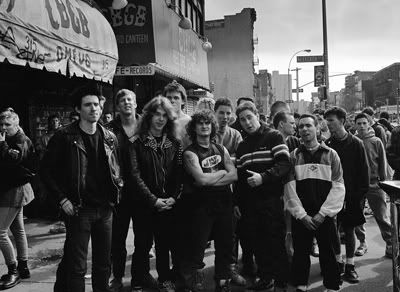
Another alternate Free For All shot, minus Token Entry plus Billy Rubin and Sammy Siegler, Photo: Ken Salerno